Indirect Lighting in 3D: Definition & Direct vs Indirect Light
 Ryan Thompson
Lighting can entirely change how a 3D scene feels, but many beginners struggle to make renders look realistic and balanced. Flat lighting, harsh shadows, and unrealistic contrast are common problems. This is where indirect lighting in 3D rendering becomes important.
By bouncing light between surfaces, indirect lighting softens shadows and adds subtle brightness to darker areas, helping scenes look more natural instead of overly sharp or artificial. In this guide, you’ll learn what indirect lighting is, how it works, how it differs from direct lighting, and why it often increases render time.
Part 1. What Is Indirect Lighting in 3D Rendering?
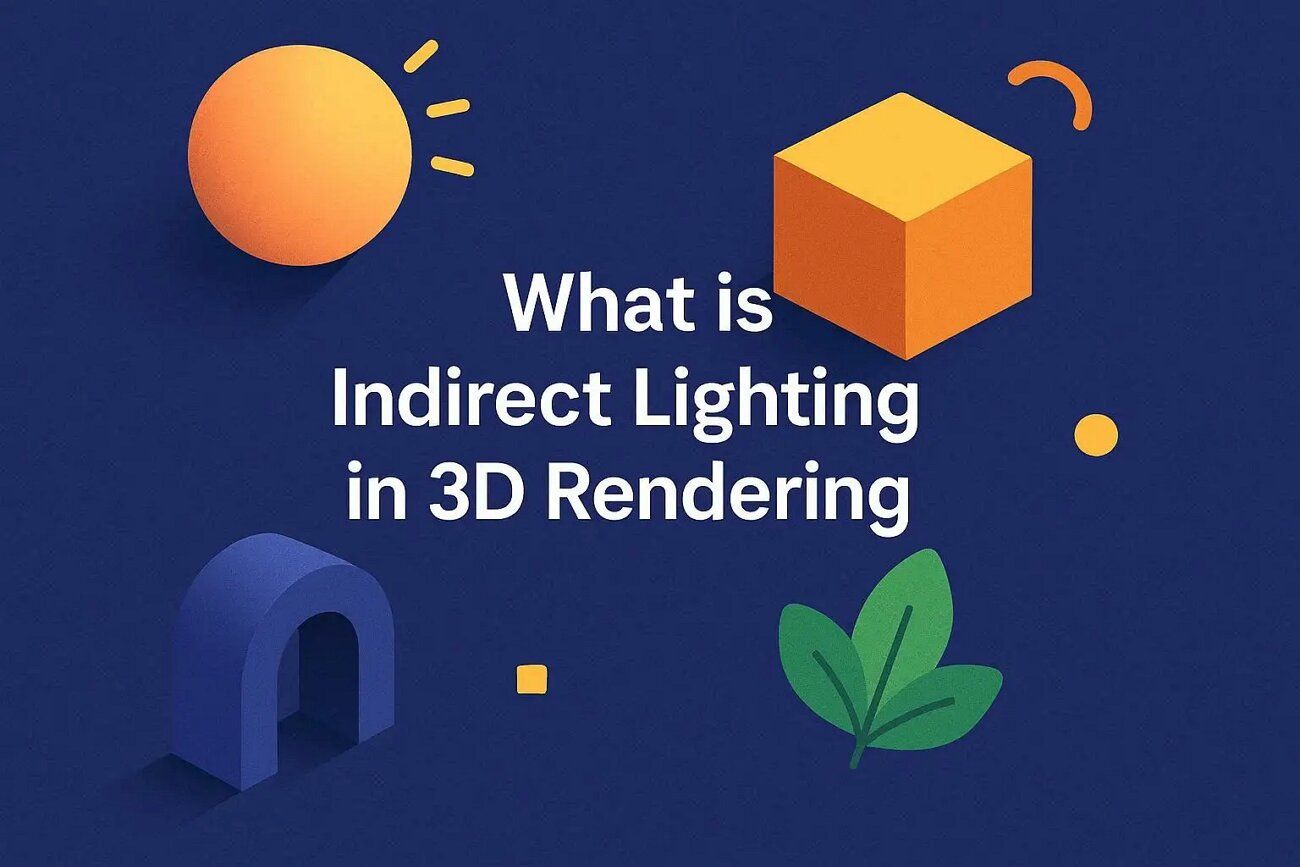
Indirect lighting in 3D rendering is the light that bounces off surfaces. In contrast to the direct lighting, it is not delivered directly by a lamp or the sun. Instead, it moves after hitting the walls and other objects in the scene. This reflected light softens shadows and creates a more evenly balanced lighting setup.
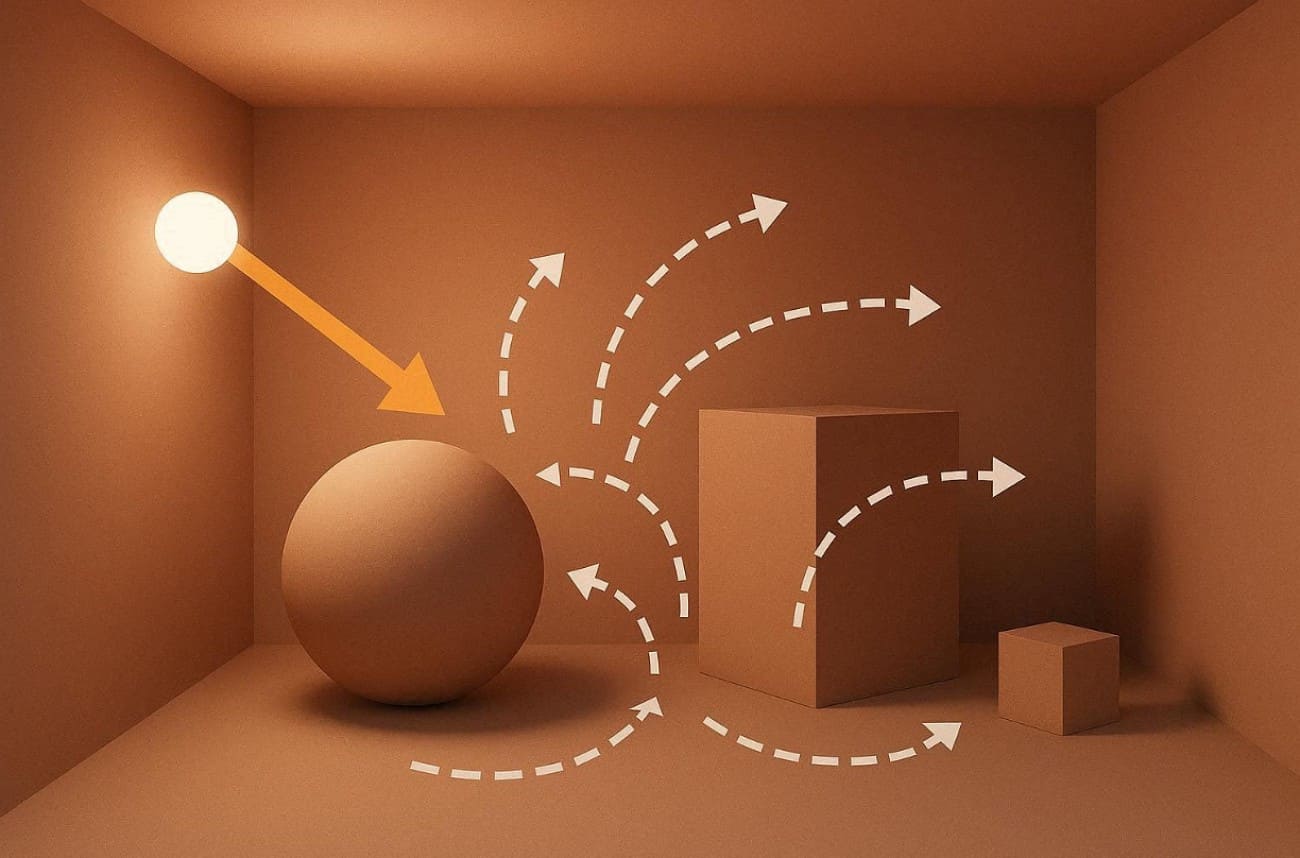
Artists can make renders look more realistic and natural with the help of indirect light. Alongside, indirect light captures how illumination behaves in the real world, adding detail and atmosphere. Without it, 3D space usually appears flat, harsh, and visually less convincing.
Part 2. What Does Indirect Lighting Do?
The indirect light definition explains how light bounces off surfaces to create natural brightness. It not only shapes the mood of a render but also improves the overall visual harmony. Below are the main functions that indirect lighting performs in both design and 3D rendering:
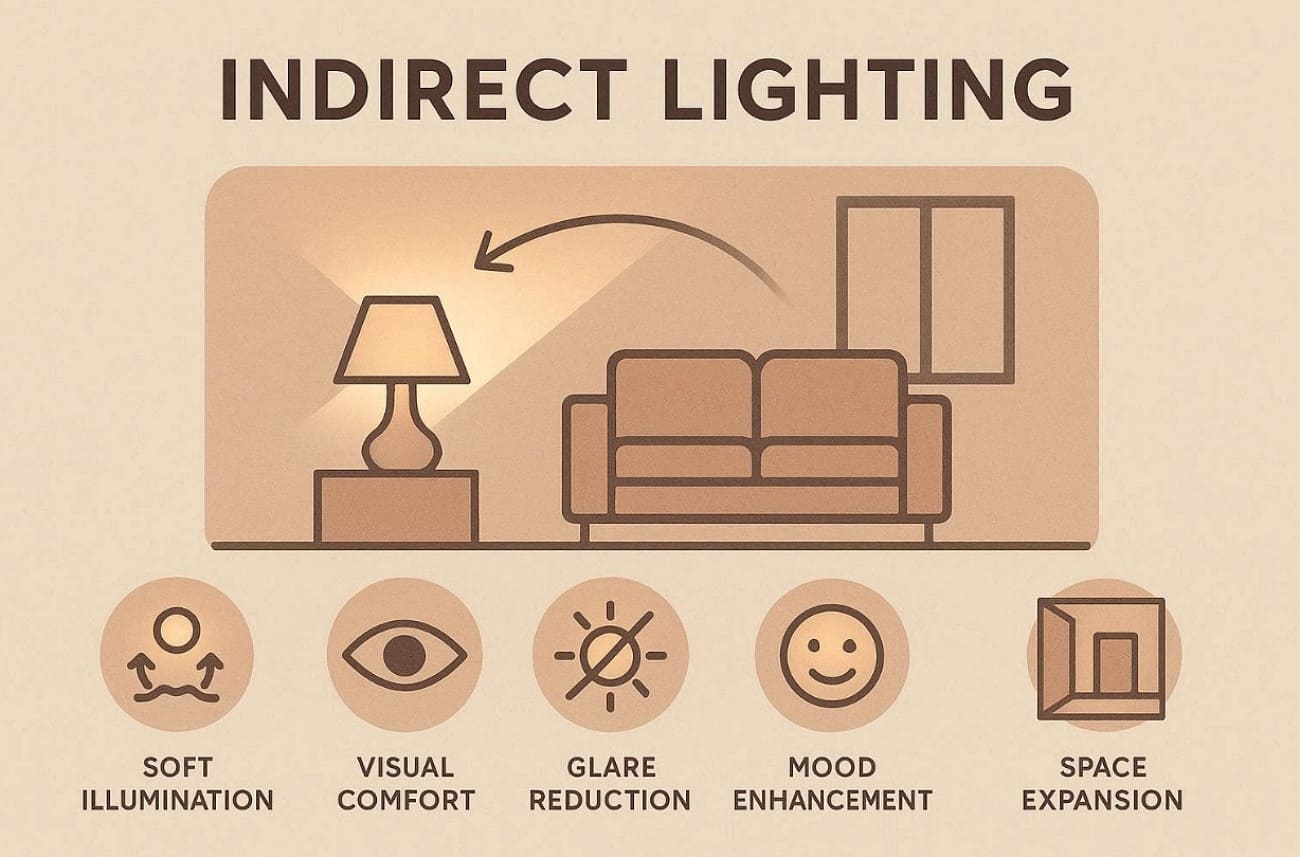
- Soft Illumination: It reflects the light evenly on the surface to reduce extreme shadows and produce gradients. This softness adds realism and makes digital or physical space appear calm.
- Visual Comfort: Indirect lighting controls contrast levels to maintain consistent brightness throughout the scene. Even tones allow each component to look natural in a harmonious and satisfying scene.
- Glare Reduction: There will be less direct glare hitting the eyes of the viewer since the primary source is hidden. This improves viewing comfort and allows longer use without causing eye strain.
- Mood Enhancement: It provides gentle light that warms scenes to appear relaxed and emotionally appealing. The designers usually use it in the interior or renders to make it look like a place of comfort and rest.
- Space Expansion: Light reflecting on walls and ceilings contributes to the feeling of a larger and brighter area. It gives a hint of structure and textures to make the perception of elegant and architectural richness.
Part 3. What's the Difference Between Direct Lighting and Indirect Lighting?
Many people wonder, “What is indirect light?" and how it differs from direct lighting. Yet, knowing the differences will allow artists and designers to select the appropriate lighting setup in a project. Thus, the comparison table below shows the differences between direct vs indirect light:
|
Aspect |
Direct Lighting |
Indirect Lighting |
|
Light Path |
Travels straight from source to object. |
Bounces off walls or ceilings softly. |
|
Brightness & Focus |
Creates sharp shadows and concentrated highlights. |
Spreads evenly with soft gradient lighting. |
|
Glare & Comfort |
It can cause strong glare and eye strain. |
The hidden source reduces glare and feels comfortable. |
|
Atmosphere |
Bold and dramatic, ideal for focused tasks. |
Soft, soothing, cozy, and relaxing ambiance. |
|
Energy Use |
Fewer fixtures, high brightness required. |
Uses reflections, often more energy efficient. |
|
Design Impact |
Emphasizes details with strong directional beams. |
Enhances space perception, makes scenes natural. |
Part 4. When to Use Direct vs Indirect Lighting?
Creators ask, "What does indirect light mean?" when deciding how to light a scene. The answer primarily depends on whether the goal is focused brightness or balanced ambient softness. Below is a clear table showing when to use direct light vs indirect light effectively in different situations:
|
Use Case |
Direct Lighting |
Indirect Lighting |
|
Task Areas |
Bright, focused light for precise work. |
Soft background light for gentle balance. |
|
Highlighting and Focus |
Emphasizes objects, art, and displays. |
Subtle fill light without causing glare. |
|
Safety and Navigation |
Clear illumination for stairs and paths. |
Gentle ambient glow improves visibility and safety. |
|
Relaxing and Cozy Spaces |
Can feel harsh or too bright. |
Warm, low-glare light creates comfort. |
|
Screen-Based Work |
May cause glare on monitors easily. |
Reduces reflections, eases long-term viewing. |
|
Architectural Enhancement |
Highlights textures but creates sharp shadows. |
Enhances space, walls, and ceiling softly. |
|
Overall Atmosphere |
Produces bold, dramatic contrast effect. |
Creates calm, uniform ambient lighting overall. |
Part 5. Why Does Indirect Lighting Take So Long to Render?
Indirect lighting takes a long time to render because it relies on multiple light bounces and heavy sampling to approximate how light interacts with surfaces. Each additional light bounce and sample increases the amount of ray tracing calculations, which quickly raises the overall render cost. For complex scenes, this often leads to long render times, high memory usage, and heavy GPU or CPU workloads.
That’s when cloud rendering becomes a stronger and faster choice for professionals needing efficiency. Render farm like Fox Renderfarm allow you to offload intensive indirect lighting workloads to remote machines, reducing the time your own system stays occupied. This can be useful for large scenes, high-resolution stills, or animation sequences where indirect lighting significantly increases render time.

Part 6. FAQs about Indirect Lighting
Q1. Why does indirect lighting produce noise in my renders?
Indirect lighting produces noise because it relies on many random bounces during scene rendering. Each bounce introduces minor brightness variations, producing visible noise when the sample count is too low. Yet, increasing sample quality or using innovative cache methods can reduce this grain effect.
Q2. Is indirect lighting the same as global illumination (GI)?
The indirect lighting is light reflected by the surfaces before the camera. Global illumination is the algorithm or process that takes into account direct and indirect light. Thus, indirect lighting is the effect, while GI is the technique that produces it.
Q3. What is bright indirect light?
Bright indirect light delivers intense yet diffused illumination without direct sun exposure on surfaces. It filters through sheer curtains or bounces off walls for comfortable brightness indoors. Such gentle light does not cause glare and contributes to natural reading light.
Conclusion
In summary, indirect lighting adds realism and subtle depth to 3D renders by simulating how light bounces between surfaces. When combined properly with direct lighting, it helps create more balanced scenes with smoother shadows and more natural transitions between light and dark areas.
In practice, the right balance between direct and indirect lighting depends on the visual goals and performance constraints of your project. For scenes where indirect lighting significantly increases render time, cloud rendering can be a practical option to reduce waiting time and keep production moving.