 Blender
 Cinema 4D
 Arnold
 3ds Max
 Houdini
 V-Ray
V-Ray Maya
Maya Unreal Engine
 Nuke
NukeThe Basics of Render Farms: What You Need to Know

Rendering high-quality visuals demands immense computational power, especially in industries like animation, gaming, and architecture. Traditional single-workstation setups often struggle to keep pace, prompting creators to turn to render farms networks of powerful computers that work together to render complex images and animations efficiently. Whether you're an independent artist, a mid-sized studio, or a large production company, understanding render farms and their potential can transform your workflow.
This guide covers essential aspects of render farms: how they work, the types available, their benefits, and a look at cloud rendering as a modern alternative to in-house setups. Let's dive in!
What is a Render Farm?

Render farms are clusters of networked computers that collaboratively tackle complex rendering tasks. This parallel processing approach drastically shortens rendering times, enabling projects that would take hours or days on a single computer to be completed much faster.
Importance in Visual Production
Render farms play a critical role in several industries:
- Film and Animation Studios use render farms to produce frames for movies, handling massive data sets and sophisticated effects.
- Game Development Studios rely on them for high-quality graphics and real-time render previews.
- Architectural Firms leverage them for photorealistic 3D visualizations and virtual tours.
How Does a Render Farm Work?
Basic Workflow
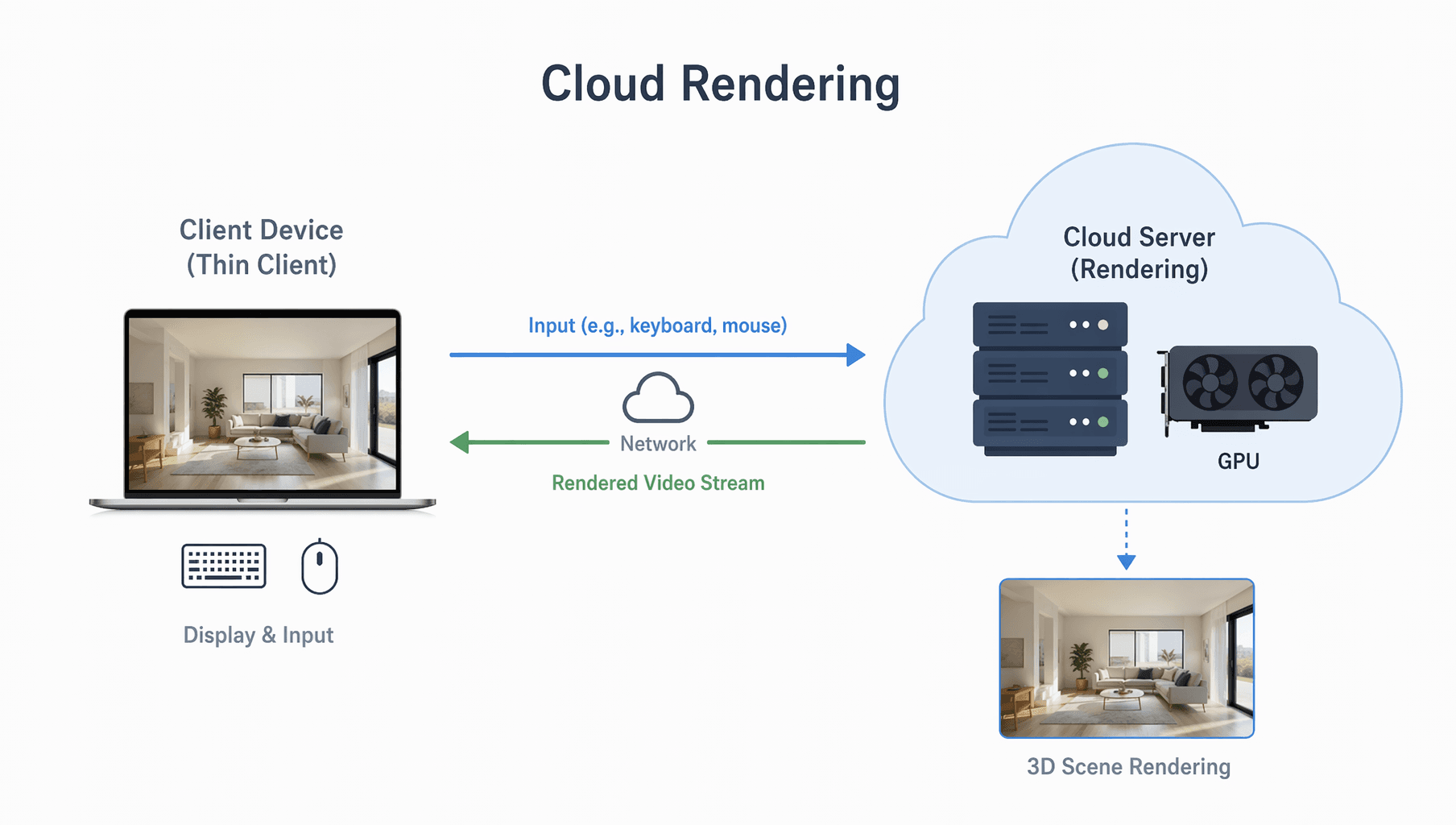
- Splitting the Task: Render farms break down the rendering process, distributing tasks across multiple computers.
- Computational Power: The combined processing power from multiple nodes (individual computers) accelerates the rendering process.
- Reassembly: Once frames or segments are rendered, they are merged into a cohesive output.
Key Components
- Servers: These manage task distribution and resource allocation.
- Rendering Nodes: Each computer in a render farm processes part of the workload.
- Rendering Software: Programs like Blender, Maya, or V-Ray are used across nodes to process each image or frame.
Types of Render Farms

In-House Render Farms
In-house render farms are built and maintained within a studio or production company.
- Pros: Full control over hardware/software and enhanced data security.
- Cons: High initial investment and limited scalability.
Cloud Render Farms
Cloud render farms, like Fox Renderfarm, operate over the internet using remote servers. They offer scalability without the need for physical hardware and maintenance.
- Popular Providers: Fox Renderfarm, RebusFarm, RenderStreet, etc.
- Pros: Cost-effective, scalable, accessible from anywhere with an internet connection.
- Cons: Data security concerns and dependence on stable internet access.
Hybrid Render Farms
Hybrid render farms combine in-house infrastructure with cloud resources, allowing studios to handle daily tasks on-site while managing overflow in the cloud during peak demand.
Key Benefits of Using Render Farms
- Time Efficiency: Render farms drastically cut down rendering times, enabling faster project turnarounds.
- Cost Savings: While in-house setups can be costly, cloud render farms like Fox Renderfarm offer pay-as-you-go pricing.
- Enhanced Quality: Render farms enable high-resolution renders and improved visual fidelity.
- Scalability: Cloud render farms allow studios to scale resources based on project needs.
In-House Render Farm vs. Cloud Render Farm
|
Feature |
In-House Render Farm |
Cloud Render Farm (e.g., Fox Renderfarm) |
|
Cost |
High initial/maintenance |
Pay-as-you-go; no hardware investment |
|
Scalability |
Limited |
Virtually unlimited |
|
Performance |
Consistent |
Dependent on internet connection |
|
Security |
High control |
Depends on provider’s security measures |
|
Accessibility |
On-premises only |
Accessible from any location |
When to Choose Render Farms
- Small to Mid-Sized Studios: Cloud options offer affordability and flexibility.
- Freelancers: Cloud render farms are accessible without major investment.
- High-Volume Projects: Hybrid setups or full-cloud solutions work well for studios needing extra power occasionally.
Factors to Consider When Choosing a Render Farm
- Project Requirements: Complex scenes require powerful render farms.
- Budget Constraints: Weigh the cost of cloud rendering (e.g., Fox Renderfarm) against in-house setups.
- Scalability Needs: In-house resources are fixed, whereas cloud render farms are easily scaled.
- Software Compatibility: Ensure the render farm supports your preferred software, such as Blender, 3ds Max, or Maya.
- Data Security: In-house farms offer full control, but cloud farms require assessing provider security standards.
Common Misconceptions About Render Farms
- "Render Farms are Only for Big Studios": Cloud rendering has made render farms, like Fox Renderfarm, accessible to small teams and individual creators.
- "Cloud Rendering is Too Expensive": Many providers offer competitive rates, making it feasible for smaller projects.
- "Render Farms are Hard to Use": User-friendly interfaces make setup and management accessible to all skill levels.
Setting Up Your Own Render Farm
Hardware and Software Requirements
An in-house render farm typically requires:
- Hardware: High-speed CPUs, ample RAM, and powerful GPUs
- Render Management Software: Tools like Thinkbox’s Deadline or OpenCue manage tasks across nodes.
Cost Analysis for Building vs. Renting
- Initial Investment: In-house setups come with high upfront costs.
- Maintenance Costs: Include power, hardware upgrades, and IT support.
- Cloud Costs: Pay-per-use options make cloud rendering more affordable for smaller projects or less frequent rendering needs.
Future of Render Farms and Cloud Rendering
- Advancements in Technology: AI-based rendering and GPU farms are making rendering faster and higher in quality.
- 5G Impact: With 5G technology, cloud render farms like Fox Renderfarm will see reduced latency, enhancing performance.
- Sustainability: While energy-intensive, green technology is improving the sustainability of render farms.
Conclusion
Render farms are invaluable to artists and studios, providing the speed and power to tackle complex rendering tasks. For those who don't have their own render farms, cloud render farms like Fox Renderfarm offer an accessible entry point with flexibility for growth and a free $25 render coupon for newcomers. And for those with long-term rendering needs, in-house setups may offer savings over time. Whether cloud, in-house, or hybrid, render farms are essential for bringing creative visions to life faster and more efficiently than ever.

 Ryan Thompson