
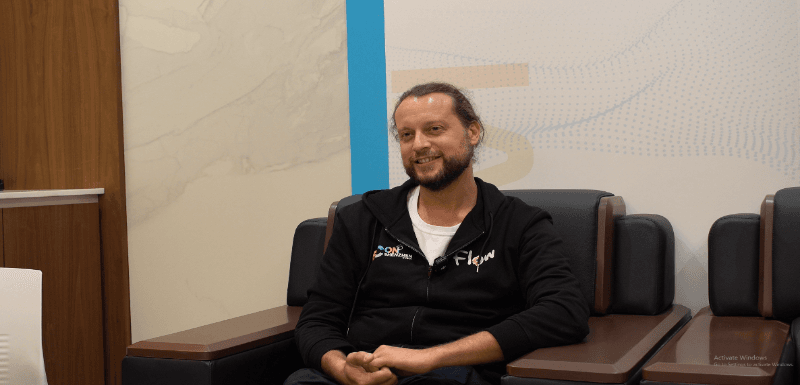
At the recent International Artificial Intelligence and Creative Conference (IAICC), we had the privilege of meeting Léo Silly-Pélissier, the animation director of the celebrated, dialogue-free animated adventure film Flow. Léo joined Fox Renderfarm, a leading cloud rendering service provider and render farm in the CG industry, for an exclusive interview, sharing his animation journey and the unique creative and technical philosophies behind crafting a world where characters communicate purely through movement and emotion. From the early days of flipbooks to leading the animation on an internationally acclaimed film, Léo offers a glimpse into the mind of an artist dedicated to authenticity, creative freedom, and the universal language of visual storytelling.
Fox Renderfarm: Hi Léo, we’re honored to have you here. Could you briefly introduce yourself?
Léo: I was the animation director of the film Flow. It was my first experience as an animation director, and it was me with a small team on a small project. So we had some budget and time constraints, but we had a lot of freedom for creativity. I could express my sensibility in this movie.
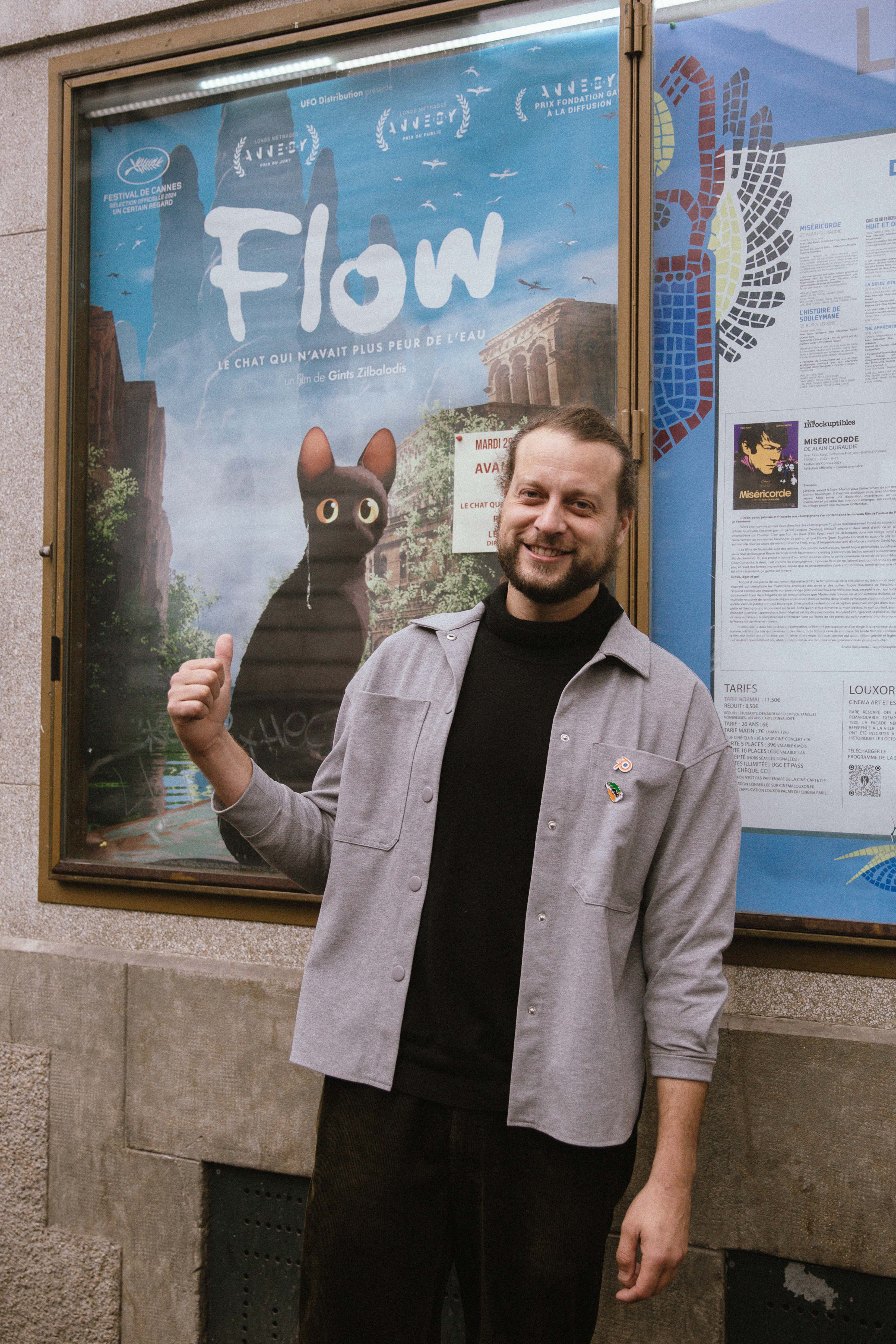
Image © Léo Silly-Pélissier
I’m so happy to have been presented to Director Gints. He is a great guy, I love him. And I’m so happy to be there with Konstantins and Mārtiņš. Those guys are my close friends now.
Fox RenderFarm: Is this your first time visiting China? How has your trip been so far, and is there anything that left a strong impression on you?
Léo: Yes, before this, I visited Xi’an two years ago to participate in the Silk Road International Film Festival (SRIFF). It was my first trip with “Flow” and my first time in China, and my experience was wonderful. I met so many great people, and I love being there.

Image © Silk Road International Film Festival (SRIFF)
I was lucky to have the time to see some great places like the Terracotta Warriors and the Ancient City Wall. Now I’m back in China for the IACCC conference and vendor conference too. It’s again an amazing experience, and I love being with you guys. It’s wonderful.
Fox Renderfarm: Can you share a bit about your background and how you entered the world of animation?
Léo: My passion for animation started in childhood. I was drawn to 2D animation from the very beginning. Around the age of ten, I was making flipbooks, and I never stopped drawing. I went on to study art in school.
But for me, it was never just about drawing—it was about movement. Back then, I didn’t even realize that “movement” could be a real job or a path in life. Once I discovered that, I began learning 3D, partly inspired by the auto industry at the time. And now here we are, navigating another technological shift with AI.
That’s why events like these conferences and festivals are so valuable. They bring us together to discuss how to handle these new tools—how to harness their potential without compromising our creativity or our roles as artists. It’s an exciting time.
I came across Blender about ten years ago. From the moment I started using it, I fell in love with the software—its intuitiveness, its accessibility. I’ve continued working with it ever since. In fact, I think that’s one reason I ended up on Flow: Gints started the project in Blender, and he needed people who knew the software well. So, in a way, I was in the right place at the right time.
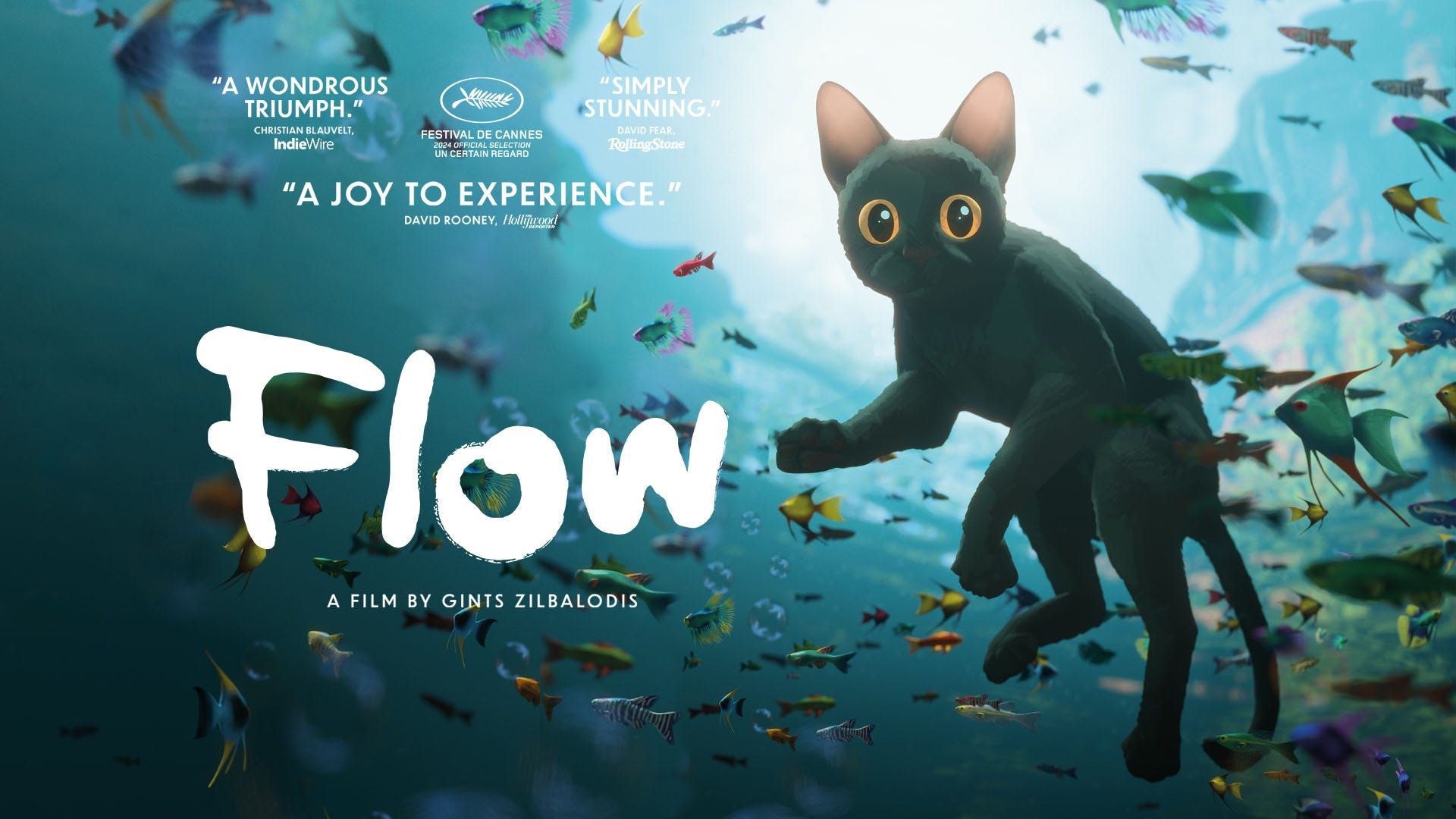
Image © Flow
Fox Renderfarm: What shaped Flow’s character-driven style?
Léo: The initial guidance really came from Gints, who had already crafted the war emblems himself. By the time I joined the project, the entire film was there in rough form—the full storyboard, complete with the movements and intentions. That foundation made it feel natural for me to visualize how the movement could evolve and where I could enhance it.
My first focus was on defining the animation style. As I mentioned during my talk, we originally aimed for realism, but time and budget constraints led us to find a middle ground between efficiency and authenticity. That’s how we arrived at what we called a "naturalistic style"—it allowed us to create believable movement while working efficiently, and occasionally taking creative liberties.
I did extensive research into the mechanics—studying how things move in reality. I gathered all that reference and developed a kind of “rule set” to guide the team: what they could and couldn’t do with the characters.
Fox Renderfarm: What drove you to tell the story without words?
Léo: There are films without dialogue, and so most of the emotion comes from expression or body language. It happens to everybody with their pets sometimes. The pet has some direction or posing, and it makes you think that they want to say or express something, like anger, or that they want food or a cushion. And everybody loves that.
That’s the feeling I tried to channel into the animation—translating those unspoken cues into movement, so the characters’ intentions could reach the audience directly.
And it’s been amazing to see that resonate. We noticed on Xiaohongshu—a popular social platform in China—so many people sharing that their cats or dogs actually watched the film along with them… which was incredible to see.
Before the movie was released, I watched the full edit (the last edit at that time). It was not finished at all, but my cat stepped up by himself on the top of my couch and watched the movie almost entirely. I was like, WOW. I sent a message to Gints, and I said, “You need to remember, it’s the first film for a pet!”
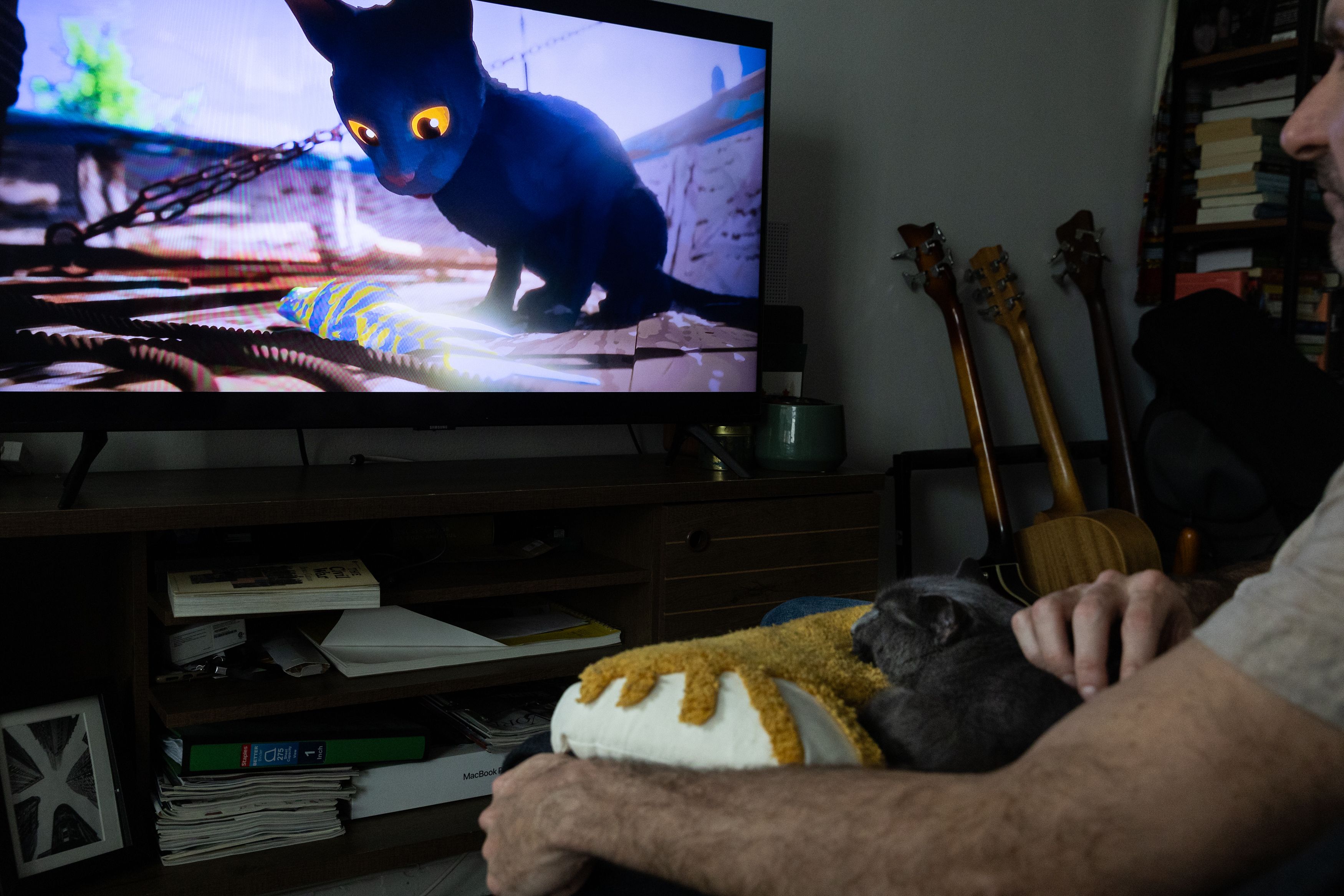
Image © The Times
Fox Renderfarm: How did you tell the story clearly through visuals and movement alone?
Léo: With the expression and the behavior of the character. Gints had already created the staging and decided what would happen in the movie, so I just enhanced what he wanted to express by adding this naturalistic animation. Sometimes I suggest ideas to make the character's actions more concise to the audience.
For example, at the end, when the mole saved their friends on the boat, the cats took the rope to give it to the limber. At first, he did that with his paw like a human being, and I suggested that he could do the same with his mouth because it could be more cat-like, while still serving the same narrative purpose. It's always a blend, a careful balance between authenticity and storytelling clarity.
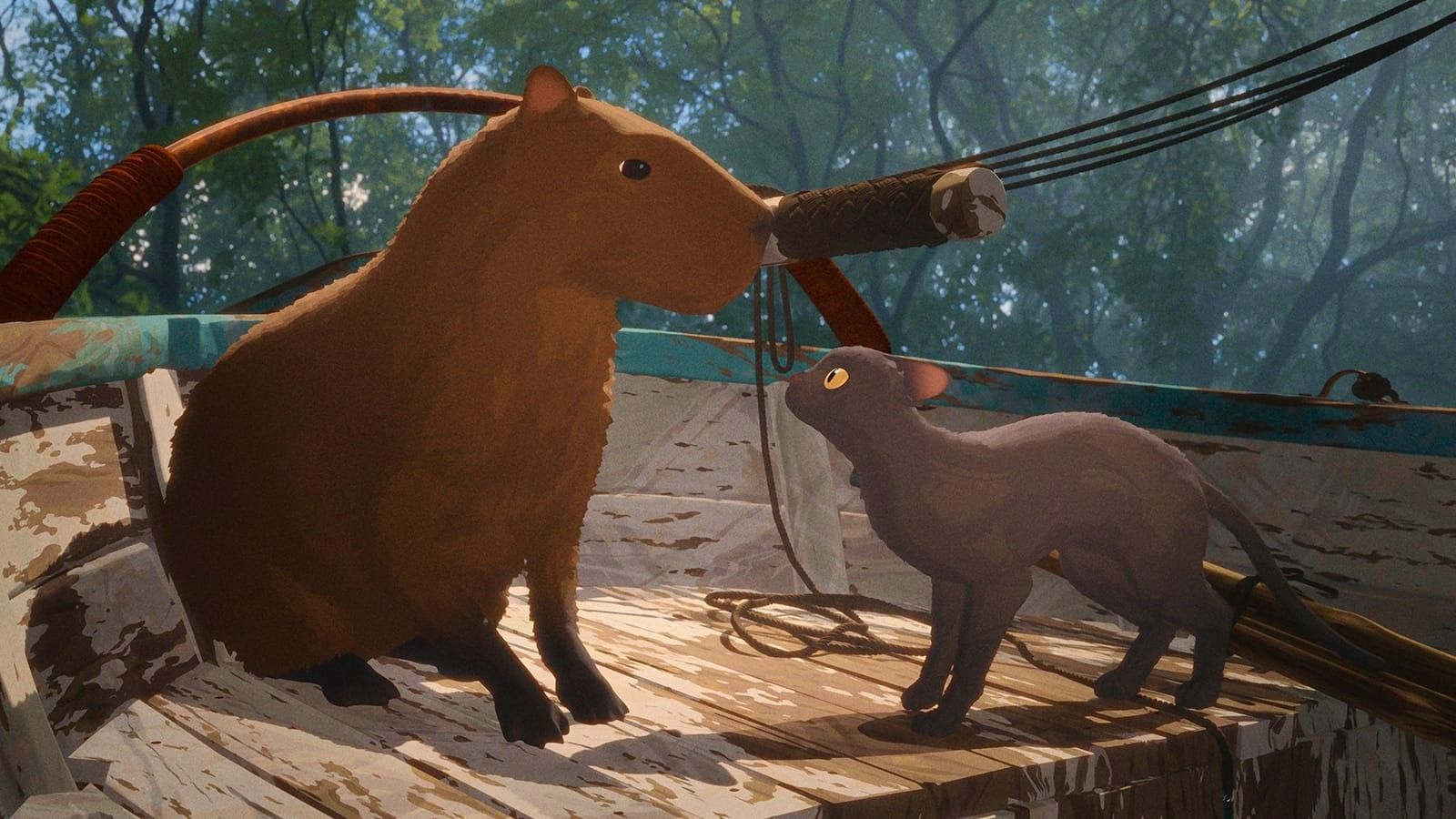
Image © Flow
Of course, Flow isn’t a realistic film—it lives in the realm of fantasy, with breathtaking moments like the bird ascending into the sky. We had to make our characters live in this fantasy moment, but within the limits of their body. So we had to determine what could and couldn’t be. I shared all the discussions with my team, also to get it as accurate as possible.
Fox Renderfarm: Which tools or pipeline steps were most crucial in making Flow work?
Léo: I think one of Blender's greatest features is the ability to copy and paste between scenes, which is extremely helpful for managing long shots—especially those over a thousand frames, some even up to six thousand frames, equivalent to about five minutes. Assigning such lengthy shots to a single animator is quite challenging.
We had to split the shot into two ways. One option was to split the character, so the animator could focus on a long shot with just one character, making it easier to maintain control over the animation. The other option was to break the shot into smaller sub-shots. While splitting is straightforward, merging them back together can be tricky. However, with Blender's copy-paste tool, this isn’t an issue at all. You simply copy the character's collection and paste it into your scene, and the character arrives complete with all its animation and constraints intact. This makes it very easy to manage scenes and ensure smooth integration, resulting in a seamless final shot.
Fox Renderfarm: What technical planning enabled Flow’s long, uninterrupted camera shots?
Léo: As animators, we adhered to Gints’ staging to keep characters properly framed, and the storytelling focused. But we had to work with great care, knowing Gints could still alter the camera after animation was completed. One of the most critical — and toughest — instructions I gave the team was: don’t break the rig.
Often in animation, if a shot looks clean from the intended camera angle, you might take shortcuts that only work from that one view. But if you turn the camera to the side, and suddenly the character looks destroyed, we couldn’t allow that on Flow — not only because the camera is constantly moving, but also because Gints might revise the framing later.
That’s why from day one, I made it clear to the team: every pose must be clean from every angle. This discipline gave Gints the freedom to adjust the camera and refine the composition without compromising the integrity of the animation.
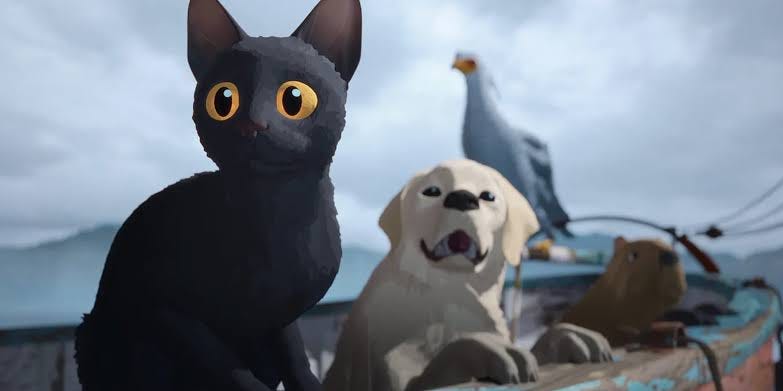
Image © Flow
Fox Renderfarm: Are you familiar with Fox Renderfarm?
Léo: No, I never tried it, but I want to. It was great to see the Fox Renderfarm team and learn about cloud rendering. In the future, I do plan to try.
Fox Renderfarm: Some advice to the young artists?
Léo: What stands out to me about Flow is its spirit. It’s a free, expressive kind of story — one that feels universal, with no dialogue, inviting viewers to interpret it in their own way. There was also a sense of creative freedom in how we made it: a young team, many of them junior animators, learning and growing together.
My advice for young people is: keep going. Keep doing what you want and what you like, and don’t try to copy what you've already seen. Flow is an indie film, while something like Pixar represents that big-industry polish that can feel almost unreachable — and for me, a bit intimidating. But seeing independent projects like ours express creativity and intelligence in their own way… that gives me hope.