
 Blender
 Cinema 4D
 Arnold
 3ds Max
 Houdini
 V-Ray
V-Ray Maya
Maya Unreal Engine
 Nuke
NukeWhat is Gobo Light? Complete Beginner's Guide to Light Projection
 Ryan Thompson
Gobo lighting is a simple way to project patterns, logos, or textures using a light source and a stencil. You’ve likely seen it in action, such as the “Bat Signal” on a wall or decorative patterns on a stage. This technique is widely used in events, film, and theater to create atmosphere and visual effects.
In this beginner’s guide, you’ll learn what gobo lighting is, how it works, and how to use it to transform ordinary spaces into more dynamic and cinematic environments.
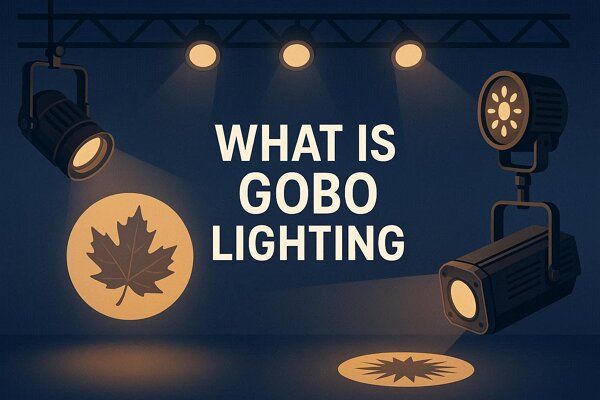
Part 1. What Is Gobo Lighting? Meaning and Origin
In simple words, the term “Gobo” means a small stencil or template placed in front of a light source to control the shape of the emitted beam. By masking the parts of the light, it projects specific patterns, textures, or even detailed logos onto the floor, walls, and ceilings.
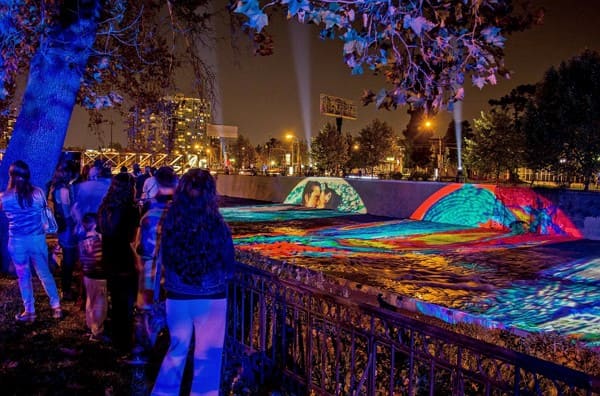
In professional environments such as theaters and film sets, gobos are typically made from thin sheets of steel or heat-resistant glass. Moreover, steel gobos are ideal for simple shapes and silhouettes, while glass gobos enable complex, high-resolution imagery.
Where Did the Term “Gobo” Come From?
While learning what Gobo lighting is, know that it originated in the 1930s Hollywood cinema and theater as slang for a device that shapes, blocks, or cuts light. The term is a mixture of “Behind the Scenes” legend, with 3 popular theories on how the name came to be:
- “Go-Between” or “Go-Before”: This theory describes the physical placement of the stencil within the light fixture, especially between the lamp and the lens that focuses the image.
- “Go Black Out” (or “GoBO”): As per this theory, it was a short for a metal plate used to block a specific section of the light. Over time, the term “Go Black Out,” used by 90s directors, was changed to “GoBOs” when physical objects were used.
- “Goes Before Optics”: This is similar to the first theory, which says that the patterns must be inserted before the light passes through the final lens assembly to be projected clearly.
Common Equipment Used in Gobo Lighting Systems
Compared to the 90s, modern Gobo lighting systems are more efficient than ever due to the shift from high-heat halogen bulbs to high-output LED engines. To further dive into the Gobo lighting effects, here are the 3 kinds of equipment used in the Gobo lighting system:
1. The Projectors (Light Engines)
The projector is the central part and is needed for the light beam. Depending on your event, you will likely use one of these three modern fixtures:
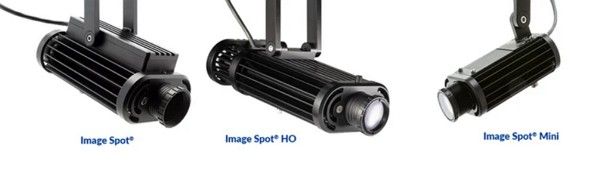
- Ellipsoidal/Leko Spotlights: The industry standard for static projections, as they allow for razor-sharp focus. It is ideal for wedding monograms or corporate logos on the walls.
- LED Moving Heads: These are the automated lights used in concerts and clubs, as they feature internal motorized wheels. They can swap between different globes and move the pattern across the room.
- Battery-Powered LED Projectors: It's a growing trend in 2026, used for outdoor and remote events. They are compact, waterproof, and require no cables, which makes them perfect for pop-up retail or garden weddings.
2. The Gobo Discs (The Stencils)
In Gobo lights, the disk is the “Slide” that contains your design, and the modern system comes with 3 materials:
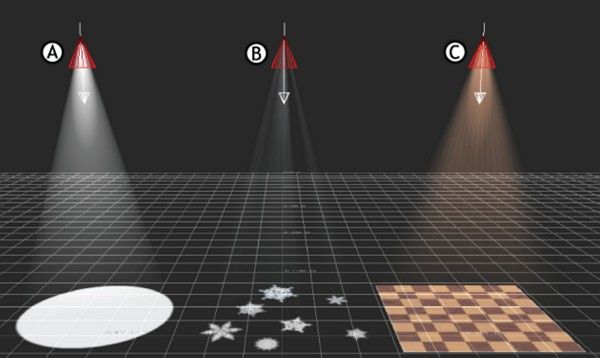
- Stainless Steel: It is the most affordable and durable, and is best for simple black-and-white patterns, such as trees or basic shapes.
- High-Resolution Glass: Made from heat-resistant glass, these allow for photo-realistic details. You can also use them for complex gradients and full-color imagery without the need for connecting lines required in the metal.
- Cool Ink/Plastic: A newer option that is designed exclusively for low-heat LED fixtures. Most of all, these are cost-effective for one-time events and support full color printing.
3. Essential Accessories
To get the perfect look in Gobo lighting, here are some other tools that lighting designers use:
- Gobo Rotators: It's an add-on motor that spins the Gobo disc to create dynamic effects like falling snow or rotating logos.
- Prisms: This is an optical glass that multiplies a single gobo image into 3, 5, or 8 identical images to create a kaleidoscope effect.
- Donuts and Irises: It's a small metal ring used to further sharpen the focus or reduce the size of the projected light circle without changing the lens.
- Color Gels: This is a thin, heat-resistant sheet placed in front of the lens to add vibrant color to a standard black-and-white metal Gobo.
Part 2. Types of Gobo Lighting in Modern Design
The Gobo is in demand in events, entertainment, and architectural lighting, with strong long-term expansion expected. While learning what a lighting Gobo is, it's important to know what type of Gobo lighting you can create and use in 2026.
1. Breakup Gobos (The “Texture” Makers)
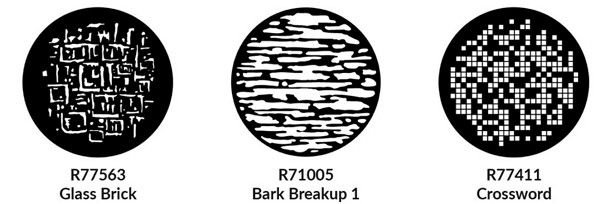
These are the non-specific patterns that are used to add depth and organic texture to a space. Their purpose is to break up large, flat surfaces such as white walls or dance floors by projecting a soft, leafy pattern using foliage, clouds, stars, or abstract patterns.
2. Branding & Monogram Gobos (The “Personalizers”)
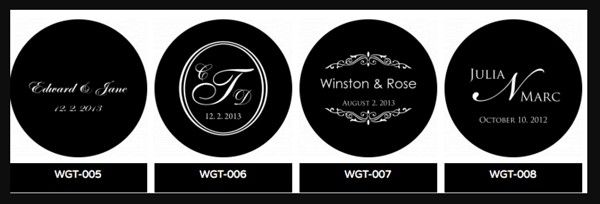
Such types of Gobos are custom-made discs that feature specific texts, logos, or high-resolution imagery. Mainly used for weddings and corporate product launches, it is made of glass to ensure a sharp texture and accurate branding. Regarding placement, they are positioned at a focal point, such as the entrance floor or the wall behind a keynote speaker.
3. Architectural Gobos (The “Space Shapers”)
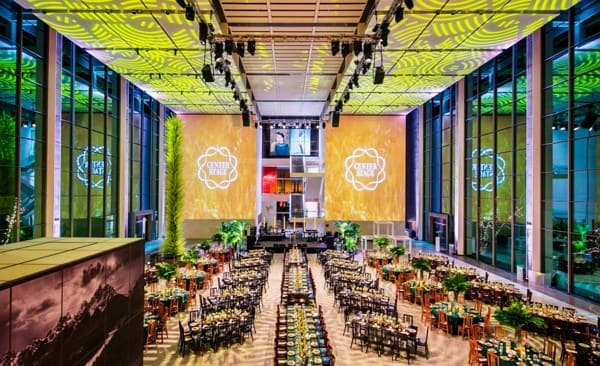
Architects use gobos to highlight specific structural features or to create faux architectural elements. They are used to project window frames, geometric lines, or even digital wallpaper onto the building. Thus, this type of Gobo allows users to change its theme instantly, transforming a modern warehouse into a gothic cathedral using only light.
4. Colored & Dichroic Gobos
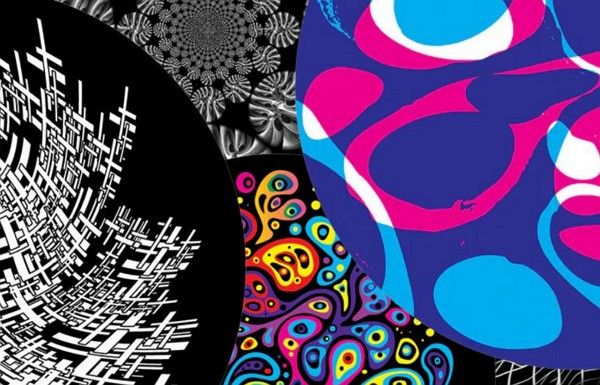
Compared to standard metal stencils, dichroic glass gobos have layers of color-filming coatings. They are used to project multi-colored patterns and are best suited for high-end hospitality environments to create vibrant, permanent art illusions.
5. Kinetic (Moving) Gobos
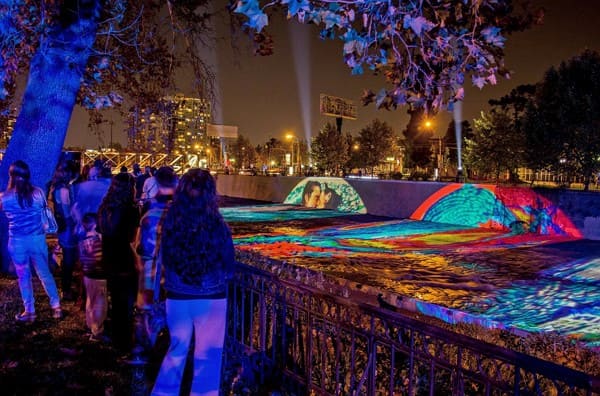
As the name suggests, they create movement, such as water ripples on a ceiling or a logo that walks across the floor to guide guests into a ballroom. Ideally, they are programmed via DMX controllers and allow the speed and direction of the movement to sync with music or event pacing.
Part 3. Benefits of Gobo Lighting for Visual Effects
While you know what gobo in lighting is, many of you might wonder why to use it. Thus, this section highlights the 5 main benefits of using Gobo lightning in 2026 as follows:
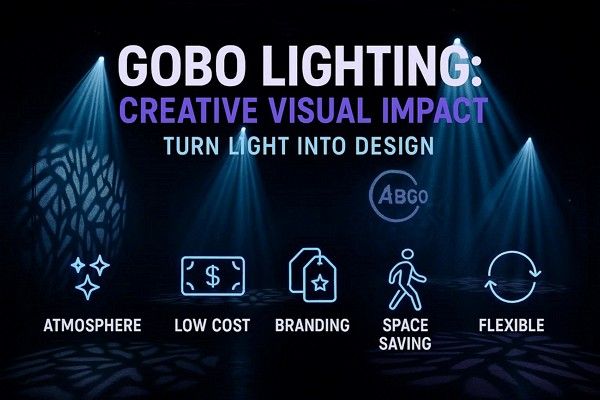
- Instant Atmosphere: Gobo lightning instantly changes the mood of a room by adding textures or patterns to plain surfaces. Thus, it can make a cold warehouse feel like a warm environment or a professional gala.
- Low-Cost Decor: You can transform a large space without buying expensive furniture or spending a lot on paint. A single light and a small metal or plastic disc can cover an entire wall with beautiful, personalized art.
- Custom Branding: Gobos allow you to project personal names or company logos with perfect clarity and sharp details. Hence, it is a high-impact way to make a brand or a wedding couple the center of attention.
- Space Efficiency: Since gobos use light, they don’t take up any floor space or create physical clutter in a venue. So, this makes them perfect for crowd events where you need to keep walkways clear for guests.
- Infinite Flexibility: You can easily switch your entire design in seconds just by sliding the new glass or metal disc. Thus, this enables you to change the look for your event from the ceremony to the party in mere seconds.
Part 4. How to Choose the Right Gobo Lighting Design
Gobo lighting design should be carefully added into the lighting design to create patterns, improve atmosphere, and make spaces more visually interesting. Since this needs to be done professionally and in a planned way, here is how you can choose the right Gobi design for your needs:
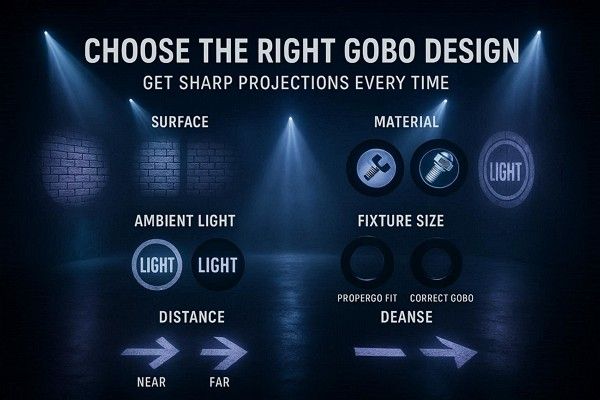
- Understand Your Surface: The texture and color of the wall or floor you are projecting onto will change how your gobo looks. Hence, understated your surface, since light-colored surfaces reflect images perfectly, whereas dark carpets or brick walls absorb light and may require high contrast and a simple design.
- Match Design to Material: Your design complexity dictated whether you needed a metal or glass. To put it simply, silhouettes and breakup patterns work best in affordable stainless steel, and intricate logos and fine text require high-resolution glass to avoid bridging lines.
- Consider Ambient Light: The amount of light also decides how bold your design should be. In a bright office or outdoor space, choose bold, thick shapes and save colored patterns for dimmed ballrooms and dark theaters.
- Check Your Fixture Size: Every lighting project has a specific “Gobo Size”, like A, B, or M, that it can hold. So, before you order a custom design, check your light’s manual for “Outside Diameter and Image Area.”
- Calculate Projection Distance: The further away your light is from the wall, the larger and dimmer the image becomes. Thus, if you are projecting from across a large hall, choose a tight design with fewer details so it doesn’t become giant and blurry.
Part 5. 5 Key Uses of Gobo Lighting in Events and Photography
Here are some areas where you can use Gobo lights perfectly if you know your design and needs:
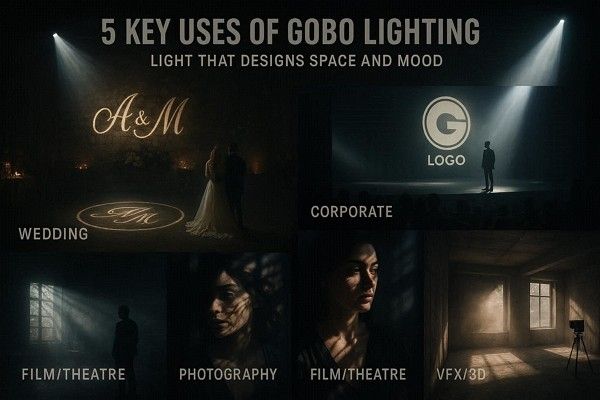
- Wedding Personalization: By projecting the couple’s initials or monogram, you can create a high-end, custom feel to the ceremony or reception. Additionally, it serves as a stunning backdrop for the first dance and adds a personal touch to the venue.
- Branding for Corporate Events: Companies use gobos to project logos across floors or building exteriors to boost brand visibility. Hence, this creates a professional, high-impact environment for product launches, conferences, and gala dinners without relying on outdated physical banners.
- Creating Background Texture in Photography: Photographers use a gobo to cast shadows that mimic windows, blinds, trees, or geometric shapes on the object. So, this adds depth and visual interest to a shot and prevents a flat or boring studio look.
- Simulating Natural Light Environments: In films and theaters, breakup gobos are used to simulate natural light filtering through leaves or clouds. This facility allows designers to create an illusion of being outdoors while remaining in a controlled indoor setting.
- Enhancing 3D Animation and VFX: Since gobos are on trend in 2026, gobos in the 3D workflow are used to cast realistic shadows and apply light textures to CGI scenes. Thus, this technique adds cinematic depth to architectural visualization and ensures that virtual lightning feels organic and grounded in reality.
Gobo Lighting in 3D Rendering and Visualization
In 3D rendering, gobo lighting is used to simulate projected patterns, which often involve sharp light edges, detailed shadows, and complex textures. These effects can increase render times, especially in animation, VFX, and architectural visualization where accuracy and realism are critical.
To handle these demands, many production pipelines use a render farm like Fox Renderfarm. By offloading rendering tasks to the cloud, you can process complex lighting scenes more efficiently without overloading local hardware. The platform supports both CPU and GPU rendering, making it suitable for different project types, from simple still images to large-scale animated sequences.
For animation projects, frames can be distributed across thousands of render nodes and processed in parallel, significantly reducing total render time. High-speed SSD storage helps improve read and write performance for textures and caches, while Raysync-based transfer accelerates the upload and download of large project files.

Frequently Asked Questions
1. Can I use a gobo with a regular household lamp?
No gobos need specialized projectors with a lens to focus on the patterns; a regular lamp would just create a blurry shadow.
2. Is it better to use a metal or glass gobo?
Metal is best for simple, affordable shapes, whereas glass is the right choice for high-detail logos, gradients, or full-color images.
3. Do gobos work in daylight?
No, Gobos are most effective in dimmed or dark environments. In daylight, the projection will appear washed out unless you use an extremely powerful high-wattage projector.
Conclusion
Gobo lighting is a simple but effective way to project patterns, logos, and textures to enhance visual scenes. From events and photography to film and stage design, it helps create more dynamic and professional lighting effects.
When working with gobo lighting in 3D rendering, especially in VFX or architectural visualization, render time and accuracy can become challenging. In these cases, cloud rendering solutions like Fox Renderfarm can help process complex lighting scenes more efficiently while maintaining high-quality shadows and detail.

 Ryan Thompson
 Ryan Thompson
 Ryan Thompson